
Share Edward Wade Nelson's obituary with others.
Invite friends and family to read the obituary and add memories.
Stay updated
We'll notify you when service details or new memories are added.
You're now following this obituary
We'll email you when there are updates.
Select your format and elements to print

IN LOVING MEMORY OF Edward Wade Nelson
Edward Wade
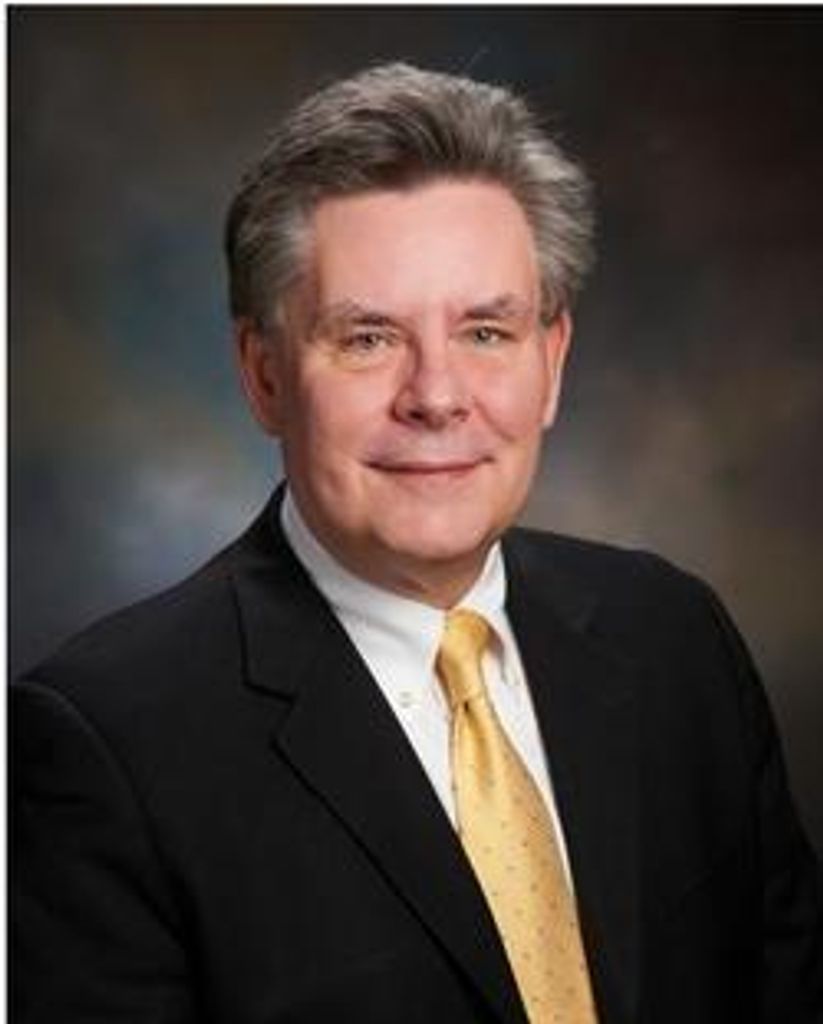
Nelson
d. Jul 25, 2017
Edward Wade Nelson's Obituary
Back in the rambunctious days of Chicago newspapers, Wade Nelson worked for the legendary columnist Mike Royko who sent his "legman" to check out a tip that Cook County judges were issued cushier toilet paper than that stocked in public restrooms.
The easy part for Nelson was grabbing samples from public toilets in the Loop courthouse now known as the Daley Center. Obtaining tissue from a judge's inner sanctum was trickier.
So Nelson made up a pretense to interview Chief Judge John Boyle, then excused himself mid-talk to use the toilet attached to the judge's chambers. He emerged to confront the startled judge with the incriminating evidence, and a great column was born.
Charmin-gate was hardly the highlight of Nelson's days as a reporter. Yet it demonstrated the resourcefulness, spunk and droll whimsy that propelled him on a rich career path from press secretary for the late U.S. Senator Alan Dixon (D-Ill.), communications director for the federal military base closure commission, political consultant, and chief speech writer for former Chicago Mayor Richard M. Daley.
That resume hardly defines the sum of Nelson, however. Friends remember him as a study in sophistication, possessed of boundless curiosity and encyclopedic knowledge of interests as varied as Midwestern architecture, jazz, the Cubs, anything Chicago related, the minutia of the small Southern Michigan town of Sturgis where his ancestors were early settlers in the 1800s, and the secret to the perfect martini. (Hendrick's gin, regular olives, straight up, with a 3.5 to 1 gin/vermouth ratio.)
"I don't know anyone who better deserves the title of bon vivant," recalled Bern Colleran, a close friend of Nelson since their days as rookie reporters at Chicago's old City News Bureau. "This guy truly knew how to live well. Friend, husband, father, mentor, cohort -- whether he was your spokesman, adviser, client or reporter, you loved working with him, playing with him, just being around him."
Nelson died July 25 of gallbladder cancer. He was 70.
Edward Wade Nelson Jr. grew up in west suburban River Forest, attended Fenwick High School in Oak Park and the University of Missouri where he graduated with a degree in journalism. There, he held membership in Kappa Tau Alpha, which he proudly and often pointed out was the "Phi Beta Kappa of Journalism."
Long before Colleran entered Nelson's circle, school friends were defining a teenaged Nelson in much the same terms. It was the 1960s and while the air was thick with protest and The Stones, Nelson delighted the unhipsters with whom he ran by being able to name all the reed players in the Duke Ellington band and blasting Daddio's Jazz Patio on the car radio.
That prompted some Fenwick classmates to hang the label "bompy-bomp" on Nelson, which meant bon vivant but kids being kids they didn't know how to pronounce it.
Years later, however, he did drive to N.Y. to take part in the contemporary music zeitgeist that became Woodstock.
Childhood friend Terry Kelleher recalled summer days with Nelson in the then sparsely occupied grandstand of Wrigley Field where the two boys didn't just watch the game but pretended to broadcast it into a tape recorder they brought along for the purpose. The call letters of their imaginary station? WADE.
As a young adult and beyond, Nelson's greatest devotion was reserved for performers at Chicago's varied night club, cabaret and piano bar scene where the men and women who played and sang there came to embrace Nelson as an honored guest and friend. He became an audience fixture at venues, most now long gone, like The Acorn on Oak, Toulouse, The London House, The Green Mill and Yvette.
Nelson even came to name his family pets after 20th Century jazz legends. There was Jelly Roll the Norwich Terrier, named for ragtime great Jelly Roll Morton; Bix the Irish Terrier, named for jazz cornetist Bix Beiderbecke; and Django the Siamese cat named for jazz guitarist Django Reinhardt.
"I once asked Wade if he'd heard of a New York-based singer-pianist named Ronny Whyte," recalled John Camper, an old friend and reporter colleague of Nelson's. "He not only had heard of him, he'd spent some quality time with him at a Cole Porter convention in Peru, Ind., Porter's home town."
As Nelson climbed the rungs of journalism jobs, from City News to the suburban Wilmette Life and then the Chicago Daily News, his career tracked closely with another young reporter, Ellen Warren, who later became a White House correspondent for the old Knight-Ridder news service and then a columnist for the Chicago Tribune. They eventually married and had two sons.
"He brought us all joy, laughter and an appreciation for finding the beauty in the world whether it was the swing of Billy Williams or the voice of Billie Holiday," said his oldest son, Ted, of Chicago. "He was caring, funny, loyal, insightful --everything you could wish for in a father, husband and friend."
After the 1978 demise of The Daily News, Nelson followed Warren to Washington, but not before he uncorked an observation that demonstrated his unflappable demeanor and wry sense of humor.
The sister Sun-Times fired dozens of Daily News reporters but absorbed all the brass. "You know in baseball when a team's having trouble they fire the manager and keep the players," Nelson cracked. "Here it's just the opposite."
In D.C., after reporting for The Baltimore Sun, he landed at Dixon's office, where he hired an inexperienced press aide, Theo Stamos, who came to think of Nelson as "the best boss a girl could have."
Stamos, now the commonwealth attorney for the county of Arlington, Va., still remembers how she pulled an all-nighter writing a floor speech for Dixon that won effusive praise for its quality from Nelson.
"He might as well have told me that I had just won the Presidential Medal of Freedom!" she recalled.
For the remainder of his life, Nelson maintained a close bond with many of the staffers he put together in Dixon's office. One of them, Thom Serafin, said Nelson became a hero to colleagues from Illinois when he leveraged his clout to get DC cable operators to start carrying Cubs games.
"The Cubs were making a run then and Wade saved the day for so many of us," said Serafin, who now runs his own Chicago-based public affairs consulting firm.
George Dahlman, another colleague from the Dixon days, said Nelson became known for a wit as dry as the martinis he favored. Once, Dahlman said, a group of staffers gathered after work at the Monocle, a Capitol Hill restaurant and watering hole, when talk turned to the TV movie "Brian's Song" about the death of former Bears running back Brian Piccolo.
One guy in the crowd confessed that the ending had brought him to tears. "Don't you know that was all made up for the movie?" Nelson asked with a straight-face. "Brian Piccolo didn't die. He's selling used cars in Schaumburg."
Katie Lamb-Heinz, also a former Dixon aide, remembered a car trip she once took with Nelson from Chicago to the LaSalle-Peru area near Starved Rock State Park that should have taken two hours but ended up taking four.
"We had to stop at every historical marker," Lamb-Heinz said. "At the time, I thought he was nuts but have since learned what a gift he had for never losing an opportunity to learn something new no matter how inane it might seem."
Hanke Gratteau, whose friendship with Nelson dated back to their reporting days at The Daily News, said she regularly had the same experience just navigating around the Chicago area with Nelson.
"If you needed to get from the lake to the western suburbs or any other place around here and the expressways were backed up, Wade was the guy who could navigate the side streets and narrate the trip with interesting facts about the houses or taverns you were passing by," recalled Gratteau, a former managing editor of The Chicago Tribune. "He was Waze before the app."
Nelson moved back to River Forest after his years in DC, but he rejoined Dixon in the mid-1990s when the then former senator chaired a politically sensitive federal commission charged with recommending the closure of surplus military bases across the country.
In subsequent years, Nelson also served as a spokesman for onetime Cook County Circuit Court Clerk Aurelia Pucinski, now an Illinois Appellate Court judge, the Illinois State Board of Education and became a program officer and grant maker at the W.K. Kellogg Foundation, a Michigan based non-profit specializing in education grants.
Wedged in between was a multi-year stint as the chief speechwriter for Daley, a difficult task making Chicago's notoriously ineloquent mayor sound eloquent.
Years ago, Colleran once asked Nelson to name his favorite among the thousands of songs he had come to memorize by heart. The answer was "Indian Summer," by composer Victor Herbert with lyrics by Al Dubin. Nelson began to sing:
"You are here to watch over some heart that is broken,
By a word that somebody left unspoken.
You're the ghost of a romance in June, going astray
Fading too soon, that's why I say,
'Farewell to you, Indian Summer!'"
Nelson is survived by his wife and sons, Ted (Sarah) and Emmett H.W. of Chicago; a sister, Karen Nelson of Chicago and a brother, Ted (Terry) of Spicewood, TX.
A memorial celebration of Wade Nelson's life will be held Oct. 7 at 2 p.m. at Frank Lloyd Wright's Unity Temple in Oak Park, followed by a reception there.
In lieu of flowers, the family requests donations to The Starr-Gennett Foundation(starrgennett.org), an Indiana-based non-profit that promotes jazz history.
The easy part for Nelson was grabbing samples from public toilets in the Loop courthouse now known as the Daley Center. Obtaining tissue from a judge's inner sanctum was trickier.
So Nelson made up a pretense to interview Chief Judge John Boyle, then excused himself mid-talk to use the toilet attached to the judge's chambers. He emerged to confront the startled judge with the incriminating evidence, and a great column was born.
Charmin-gate was hardly the highlight of Nelson's days as a reporter. Yet it demonstrated the resourcefulness, spunk and droll whimsy that propelled him on a rich career path from press secretary for the late U.S. Senator Alan Dixon (D-Ill.), communications director for the federal military base closure commission, political consultant, and chief speech writer for former Chicago Mayor Richard M. Daley.
That resume hardly defines the sum of Nelson, however. Friends remember him as a study in sophistication, possessed of boundless curiosity and encyclopedic knowledge of interests as varied as Midwestern architecture, jazz, the Cubs, anything Chicago related, the minutia of the small Southern Michigan town of Sturgis where his ancestors were early settlers in the 1800s, and the secret to the perfect martini. (Hendrick's gin, regular olives, straight up, with a 3.5 to 1 gin/vermouth ratio.)
"I don't know anyone who better deserves the title of bon vivant," recalled Bern Colleran, a close friend of Nelson since their days as rookie reporters at Chicago's old City News Bureau. "This guy truly knew how to live well. Friend, husband, father, mentor, cohort -- whether he was your spokesman, adviser, client or reporter, you loved working with him, playing with him, just being around him."
Nelson died July 25 of gallbladder cancer. He was 70.
Edward Wade Nelson Jr. grew up in west suburban River Forest, attended Fenwick High School in Oak Park and the University of Missouri where he graduated with a degree in journalism. There, he held membership in Kappa Tau Alpha, which he proudly and often pointed out was the "Phi Beta Kappa of Journalism."
Long before Colleran entered Nelson's circle, school friends were defining a teenaged Nelson in much the same terms. It was the 1960s and while the air was thick with protest and The Stones, Nelson delighted the unhipsters with whom he ran by being able to name all the reed players in the Duke Ellington band and blasting Daddio's Jazz Patio on the car radio.
That prompted some Fenwick classmates to hang the label "bompy-bomp" on Nelson, which meant bon vivant but kids being kids they didn't know how to pronounce it.
Years later, however, he did drive to N.Y. to take part in the contemporary music zeitgeist that became Woodstock.
Childhood friend Terry Kelleher recalled summer days with Nelson in the then sparsely occupied grandstand of Wrigley Field where the two boys didn't just watch the game but pretended to broadcast it into a tape recorder they brought along for the purpose. The call letters of their imaginary station? WADE.
As a young adult and beyond, Nelson's greatest devotion was reserved for performers at Chicago's varied night club, cabaret and piano bar scene where the men and women who played and sang there came to embrace Nelson as an honored guest and friend. He became an audience fixture at venues, most now long gone, like The Acorn on Oak, Toulouse, The London House, The Green Mill and Yvette.
Nelson even came to name his family pets after 20th Century jazz legends. There was Jelly Roll the Norwich Terrier, named for ragtime great Jelly Roll Morton; Bix the Irish Terrier, named for jazz cornetist Bix Beiderbecke; and Django the Siamese cat named for jazz guitarist Django Reinhardt.
"I once asked Wade if he'd heard of a New York-based singer-pianist named Ronny Whyte," recalled John Camper, an old friend and reporter colleague of Nelson's. "He not only had heard of him, he'd spent some quality time with him at a Cole Porter convention in Peru, Ind., Porter's home town."
As Nelson climbed the rungs of journalism jobs, from City News to the suburban Wilmette Life and then the Chicago Daily News, his career tracked closely with another young reporter, Ellen Warren, who later became a White House correspondent for the old Knight-Ridder news service and then a columnist for the Chicago Tribune. They eventually married and had two sons.
"He brought us all joy, laughter and an appreciation for finding the beauty in the world whether it was the swing of Billy Williams or the voice of Billie Holiday," said his oldest son, Ted, of Chicago. "He was caring, funny, loyal, insightful --everything you could wish for in a father, husband and friend."
After the 1978 demise of The Daily News, Nelson followed Warren to Washington, but not before he uncorked an observation that demonstrated his unflappable demeanor and wry sense of humor.
The sister Sun-Times fired dozens of Daily News reporters but absorbed all the brass. "You know in baseball when a team's having trouble they fire the manager and keep the players," Nelson cracked. "Here it's just the opposite."
In D.C., after reporting for The Baltimore Sun, he landed at Dixon's office, where he hired an inexperienced press aide, Theo Stamos, who came to think of Nelson as "the best boss a girl could have."
Stamos, now the commonwealth attorney for the county of Arlington, Va., still remembers how she pulled an all-nighter writing a floor speech for Dixon that won effusive praise for its quality from Nelson.
"He might as well have told me that I had just won the Presidential Medal of Freedom!" she recalled.
For the remainder of his life, Nelson maintained a close bond with many of the staffers he put together in Dixon's office. One of them, Thom Serafin, said Nelson became a hero to colleagues from Illinois when he leveraged his clout to get DC cable operators to start carrying Cubs games.
"The Cubs were making a run then and Wade saved the day for so many of us," said Serafin, who now runs his own Chicago-based public affairs consulting firm.
George Dahlman, another colleague from the Dixon days, said Nelson became known for a wit as dry as the martinis he favored. Once, Dahlman said, a group of staffers gathered after work at the Monocle, a Capitol Hill restaurant and watering hole, when talk turned to the TV movie "Brian's Song" about the death of former Bears running back Brian Piccolo.
One guy in the crowd confessed that the ending had brought him to tears. "Don't you know that was all made up for the movie?" Nelson asked with a straight-face. "Brian Piccolo didn't die. He's selling used cars in Schaumburg."
Katie Lamb-Heinz, also a former Dixon aide, remembered a car trip she once took with Nelson from Chicago to the LaSalle-Peru area near Starved Rock State Park that should have taken two hours but ended up taking four.
"We had to stop at every historical marker," Lamb-Heinz said. "At the time, I thought he was nuts but have since learned what a gift he had for never losing an opportunity to learn something new no matter how inane it might seem."
Hanke Gratteau, whose friendship with Nelson dated back to their reporting days at The Daily News, said she regularly had the same experience just navigating around the Chicago area with Nelson.
"If you needed to get from the lake to the western suburbs or any other place around here and the expressways were backed up, Wade was the guy who could navigate the side streets and narrate the trip with interesting facts about the houses or taverns you were passing by," recalled Gratteau, a former managing editor of The Chicago Tribune. "He was Waze before the app."
Nelson moved back to River Forest after his years in DC, but he rejoined Dixon in the mid-1990s when the then former senator chaired a politically sensitive federal commission charged with recommending the closure of surplus military bases across the country.
In subsequent years, Nelson also served as a spokesman for onetime Cook County Circuit Court Clerk Aurelia Pucinski, now an Illinois Appellate Court judge, the Illinois State Board of Education and became a program officer and grant maker at the W.K. Kellogg Foundation, a Michigan based non-profit specializing in education grants.
Wedged in between was a multi-year stint as the chief speechwriter for Daley, a difficult task making Chicago's notoriously ineloquent mayor sound eloquent.
Years ago, Colleran once asked Nelson to name his favorite among the thousands of songs he had come to memorize by heart. The answer was "Indian Summer," by composer Victor Herbert with lyrics by Al Dubin. Nelson began to sing:
"You are here to watch over some heart that is broken,
By a word that somebody left unspoken.
You're the ghost of a romance in June, going astray
Fading too soon, that's why I say,
'Farewell to you, Indian Summer!'"
Nelson is survived by his wife and sons, Ted (Sarah) and Emmett H.W. of Chicago; a sister, Karen Nelson of Chicago and a brother, Ted (Terry) of Spicewood, TX.
A memorial celebration of Wade Nelson's life will be held Oct. 7 at 2 p.m. at Frank Lloyd Wright's Unity Temple in Oak Park, followed by a reception there.
In lieu of flowers, the family requests donations to The Starr-Gennett Foundation(starrgennett.org), an Indiana-based non-profit that promotes jazz history.
To send flowers with our preferred florist or plant a memorial tree, please visit our flower store.
Funeral Services for Edward Wade Nelson
Memorial Service

October
7
Saturday
Frank Lloyd Wright Unity Temple
Starts at 2:00 pm
Edward Wade Nelson's Guestbook
Visits: 18
This site is protected by reCAPTCHA and the
Google Privacy Policy and Terms of Service apply.
Service map data © OpenStreetMap contributors